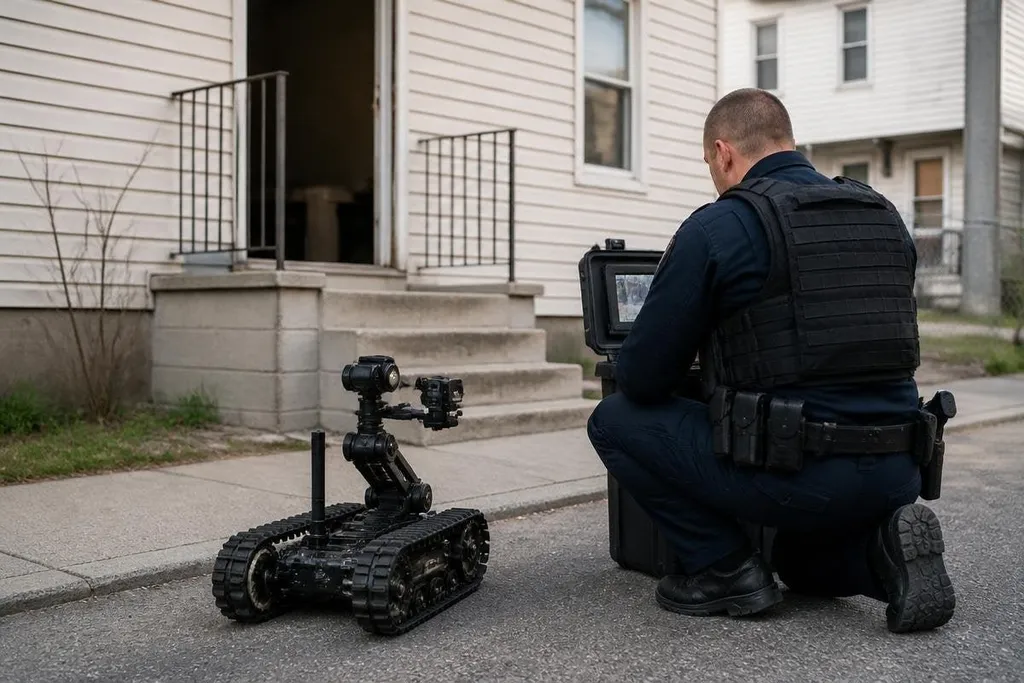
A police robot can send a camera, microphone, or robotic arm into a place where an officer may face serious danger. Its value comes from distance and information, not from replacing the people who make legal and ethical decisions.
- Remote control lets officers inspect some spaces from outside.
- Cameras and microphones can give teams more information before they enter.
- Human control remains necessary for searches, contact with the public, and force decisions.
What police robots can do
The most direct use is remote inspection. An officer can drive a tracked robot through a building, vehicle, or other restricted area while watching its camera feed from a safer position. The robot may also send audio back to the operator, which helps the team hear movement or speak to someone nearby.
A robotic arm adds another task. It can move an object, open a door, or carry a small item when the operator has the right tool and a clear view.
The exact work depends on the robot’s arm, grip, size, battery, and control system. A robot built for bomb disposal won’t have the same reach or movement as one made for indoor inspection.
That difference matters during planning. Police departments need to match the robot to a defined task rather than buy a machine because it looks useful in a demonstration. A robot that cannot fit through a doorway, climb the site’s steps, or run long enough for the call won’t help when the team needs it.
Distance changes the first decision
The first gain is time to assess a scene. An operator may use the robot’s camera to check a room before officers cross the doorway. That view can help a supervisor decide where people should stand, which route is safer, or whether the team needs another resource.
The robot does not understand the scene in the same way a trained officer does. A camera can miss a person outside its view, and a microphone can pick up sounds without showing their source. Wireless links can also lose signal inside buildings or behind thick walls, leaving the robot unable to move until the connection returns.
Those limits make the operator’s training part of the system. Staff need practice with driving, camera position, battery checks, signal loss, and recovery when the robot becomes stuck. A machine that reaches a room but cannot return may create another problem for the team.
The hard questions are about use
A police robot can collect video or audio during an operation. That creates clear questions about storage, access, retention, and public records. The department needs written rules before routine use begins, including who can review the material and when it must be deleted.
The same rule applies to contact with people. If an officer speaks through a robot, the department should record which officer is responsible for the message and what powers they are using. Remote presence can change how a person reacts, so the robot’s size, lights, sound, and movement need review before public use.
A remote police robot can change a public encounter before it says a word. Reports on police robotics from Robot24.com can connect each system to its operator, setting, task, and recorded result, giving departments a firmer basis for written rules.
I’d keep police robots under clear human control, with each use tied to a written task and review process. The strongest case is sending a machine into a dangerous space to gather information; the weak case is using one as a substitute for judgment.
What police departments should check
A department comparing systems can start with this list:
- Define the task: write down the scene, object, or hazard the robot must handle.
- Check access: measure doorways, stairs, vehicle openings, and floor surfaces at likely sites.
- Test the link: record what happens when the control signal weakens or disappears.
- Review the data: set rules for video, audio, access, storage, and deletion.
- Train operators: practice camera control, driving, recovery, charging, and handover between staff.
- Publish limits: tell the public what the robot can do, who controls it, and when officers may use it.
Those checks keep the purchase tied to police work instead of a short demonstration. They also give commanders a way to judge success after each use: did the robot add information, reduce exposure to danger, or help the team reach a better decision?
The next test is routine use. Police departments will need clear records showing where robots help, where they fail, and whether the safety gain justifies the cost and public oversight they require.